Ruby City: Stepping Inside a Ruby
Yesterday, I finally had the opportunity to visit Ruby City in San Antonio, designed by David Adjaye.
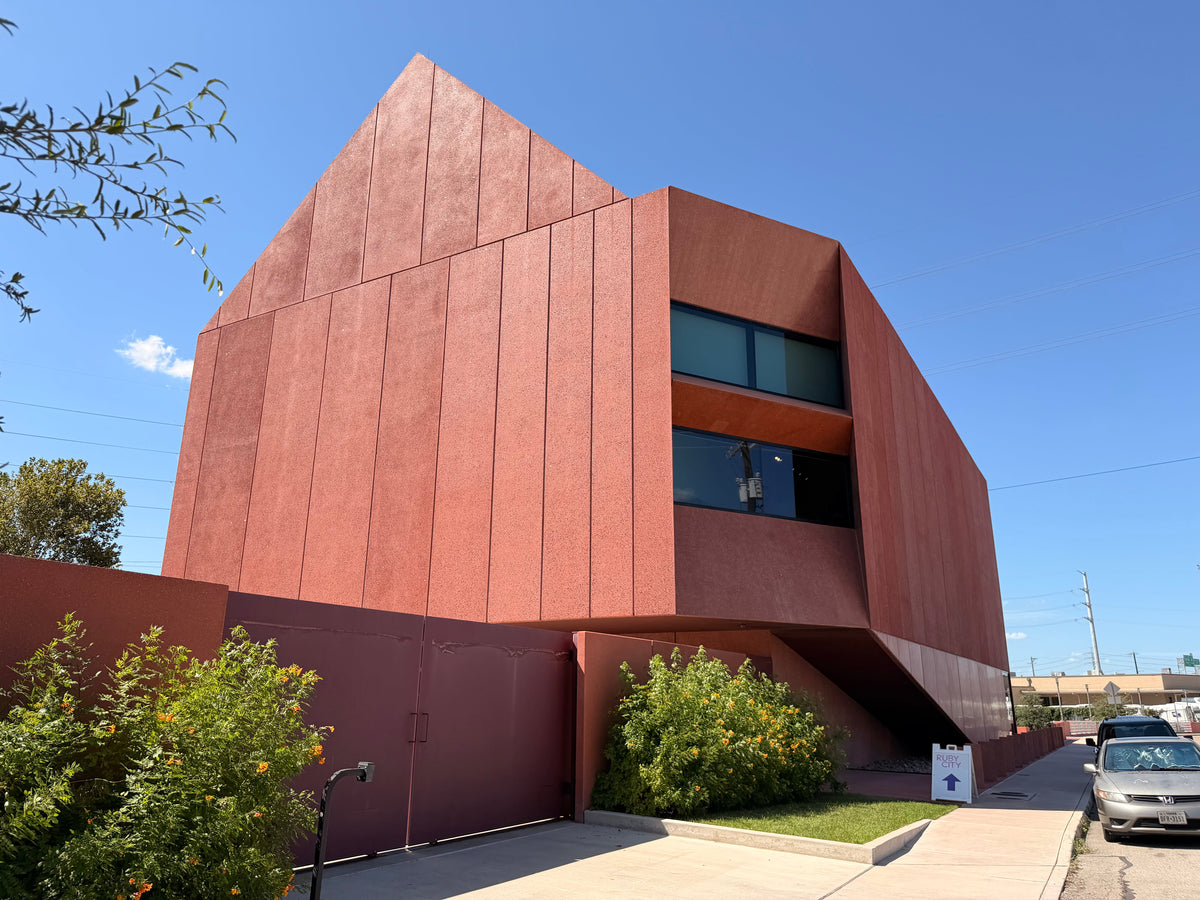
From the outside, the building immediately brought to mind a cut ruby. Its angular, faceted form and deep red surface gave it the presence of a gemstone. As sunlight caught the glass embedded in the exterior, the building glistened and sparkled, changing with the light.


As I approached the entrance, I found myself moving beneath the building. The space felt dark and heavy, enclosed by the mass above. Looking up, I noticed a triangular cut in the structure, revealing a glimpse of sky. Light entered in small moments, drawing the eye upwards and offering a sense of openness within the weight of the architecture.

From this darkened entrance, a concrete staircase led upwards. As I ascended, the experience gradually shifted. At the top, I emerged into a bright, white gallery designed to bring the artwork into focus.


Looking back, it felt almost as though I had stepped inside the ruby itself. The faceted red exterior gave way to a darker, sheltered space before opening into light.
What stayed with me was the way the building revealed itself through contrast and movement: heavy and light, enclosed and open, darkness and brightness. The architecture did not reveal everything at once. It guided me through a sequence of spaces, each changing my perception of the next.
As an architect and artist, I am drawn to these relationships between solid and void, material and space, and the ways light can transform what we experience. At Ruby City, the opening in the heavy mass to reveal the sky was as memorable to me as the building's striking exterior.
It was a reminder that architecture is not only about what is built, but also about what is carved away — and the light that enters as a result.